Plus a list of what you will need and important tips for foraging and harvesting.
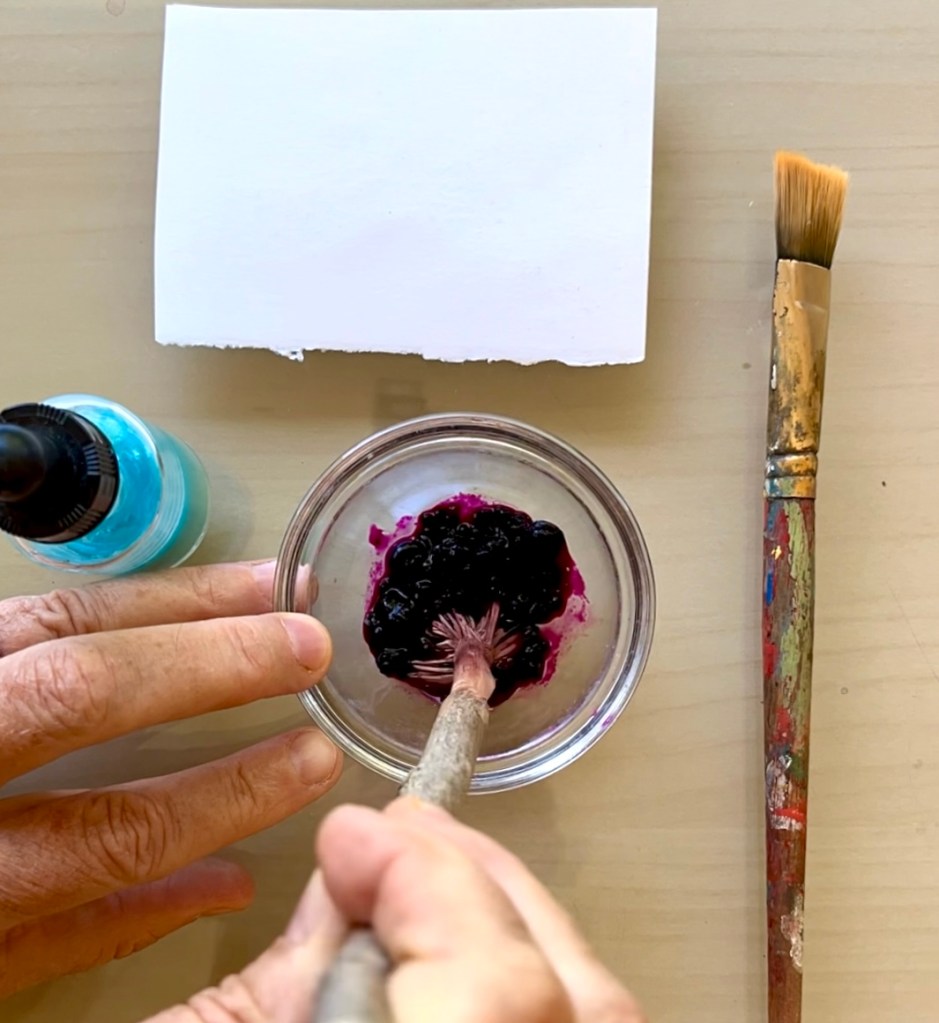
By Jorie Morgan
Why make handmade, natural inks?
There are so many reasons why:
- The practice of foraging leaves, berries, blossoms and nuts can connect you to plant beings in deep and meaningful ways.
- The beauty these inks create is quite different from anything that you might create on my own. You will become the tool needed to assist these beings into new expression and art. It is interspecies collaboration.
- This practice is very inexpensive. You just need some pots, spoons, jars for storage, a source of heat, time and patience.
- Natural inks are much less toxic or non-toxic compared to commercially-created inks and paints. This means that they are safer to use in your home and with or around kids and around pets.
- Most of these inks are compostable, so there is little to no waste.
- Working with these plants, metals and inks will expand your color palette in fun and surprising ways.
- You will learn a lot about these plants and the region in which you live.
What will I need to create these inks?
- Foraged plant and/or metal samples (please read the section on foraging below)
- Some kind of liquid (usually water, but sometimes vinegar). Each recipe will guide you.
- A source of heat (stovetop or hotplate).
- Metal pots, wooden spoons, potholders, trivets, glass jars, and measuring implements (if you like to measure). None of these items need to be new. Some of them will get stained in the process of creating natural inks, so it is best to have a separate set of these items set aside just for ink making.
How does one forage for plants?
- My first suggestion is to read this beautiful article by Robin Wall Kimmerer about engaging in a responsible and loving practice of foraging and harvesting practice called “The Honorable Harvest.”
- After you have read this article, start walking around the region in which you live. Notice what plants live there and take note of which plants might work with you to create some color. It’s helpful to be on the lookout for certain trees (Black walnut and Oak), berries and grapes (Wild grapes, Chokeberries and Pokeberries), and flowers (Coreopsis and Goldenrod).
- When you find a plant you want to work with, ask it if it would like to collaborate with you. I do this silently (“in my head”), and I will often tell the plant why I want to work together (“to make art,” or “to assist in teaching” are my most common reasons why. Your communication might be heard, felt, or seen (I’ve asked berries that I swear smiled at me in response). Listen carefully and then trust your intuition.
- If the plant says “yes,” carefully take a small sample (a couple of berries, a handful of acorn caps, etc). If it is a plant you are not familiar with, take a sample that includes a leaf if possible. This helps to identify it. Do not over-harvest. You want to take a small sample to see if this plant and you can create color together. You can always return for more if needed.
- If the plant says “no” or nothing, please do not try and harvest from this plant. When plants are quiet, they might be under-resourced (as in not enough water or nutrients, weakened from certain predators, or scarce. Respect what you hear (or don’t hear).
- If you cannot use your harvested samples right away, many can be stored in a refrigerator or freezer for later use. Try not to waste your samples.
- PLEASE NOTE: it is very important to know what plants in your region are poisonous! And be mindful of ticks. Wear appropriate clothing for foraging in the wild (long pants tucked in white socks, long sleeves, gloves and a hat can help prevent cuts from thorns and tick interaction).
- And… have fun, enjoy your plant “conversations” and being outdoors!
How does one forage for metals?
For copper, I ask my artist friends (especially sculptors and printmakers) if they have any extra bits of copper lying around. For iron, I look for rusty scraps on the sides of roads.
Stay tuned for more blog posts with recipes and instructions!
This text is open source! Please feel free to share!
 Magical Nature Tarot